


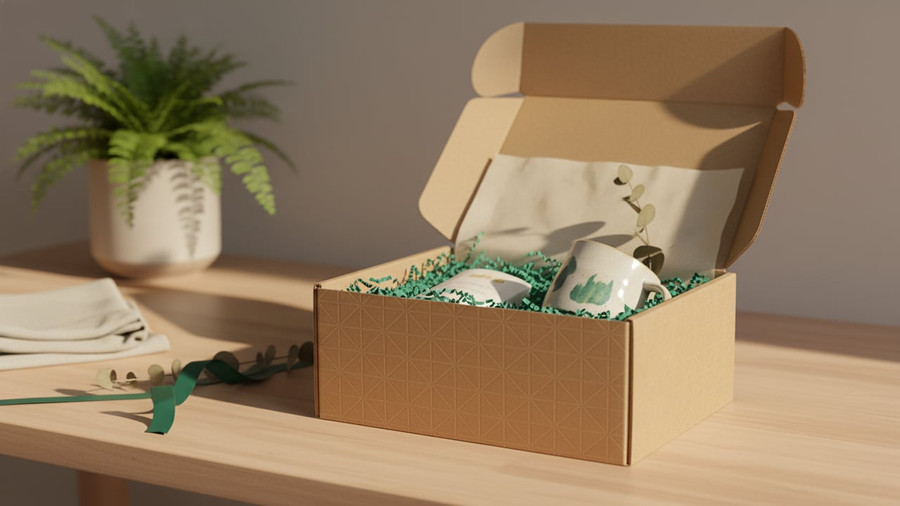
The Small Business Guide to Custom Printed Boxes
Posted by David Chen on 22nd May 2026
Custom printed boxes turn a shipping expense into a marketing channel — the package becomes part of the product, the unboxing, and the social-media moment. But the pricing, lead times, and printing methods can trip up first-timers. This guide covers what a small business actually needs to know before placing a custom order.
Why Go Custom
- Brand recognition — a printed box is a billboard from doorstep to desk.
- Unboxing experience — interior print and tidy fit drive shares and repeat purchases.
- Right-fit sizing — custom dimensions cut void fill and dimensional-weight postage.
- Perceived value — a considered package makes the product feel more premium.
Printing Methods
- Digital print: no plates, low setup cost, ideal for small runs and full-color art. Best for startups and frequent design changes.
- Flexographic (flexo): uses plates; cheaper per unit at high volume but has plate setup fees. Best for 1–3 spot colors at scale.
- Litho-laminate: highest print quality laminated to corrugated; premium retail look at premium cost.
Understand Minimums and Lead Times
- MOQs: digital can start in the low hundreds; flexo often requires thousands to justify plate costs.
- Lead times typically run 2–4 weeks for production plus shipping — order well ahead of peak season.
- Plate fees are one-time for flexo; reorders are cheaper once plates exist.
Design for the Box, Not the Screen
- Work to the printer's dieline template so artwork lines up after folding.
- Account for the flute texture — fine gradients and tiny type can look rough on corrugated; favor bold shapes and solid colors.
- Keep important art away from fold and glue zones.
- Ask whether colors are CMYK process or spot (Pantone) and request a physical proof before the full run.
Control the Cost
- Fewer colors lower flexo cost; one or two spot colors can look sharp and cost far less.
- Print one or two panels instead of full coverage to save on ink.
- Standard box styles (like the self-locking mailer) avoid custom-die surcharges.
- Order to forecast — bigger runs lower unit cost, but don't tie up cash in inventory you can't move.
Start Small and Iterate
For most small businesses, a short digital run of a well-designed, right-sized mailer box is the smart first step: low minimums, full color, and a real proof in hand before committing. Once a design proves itself and volume grows, move to flexo to bring the unit cost down. Let the package earn its keep, then scale it.